



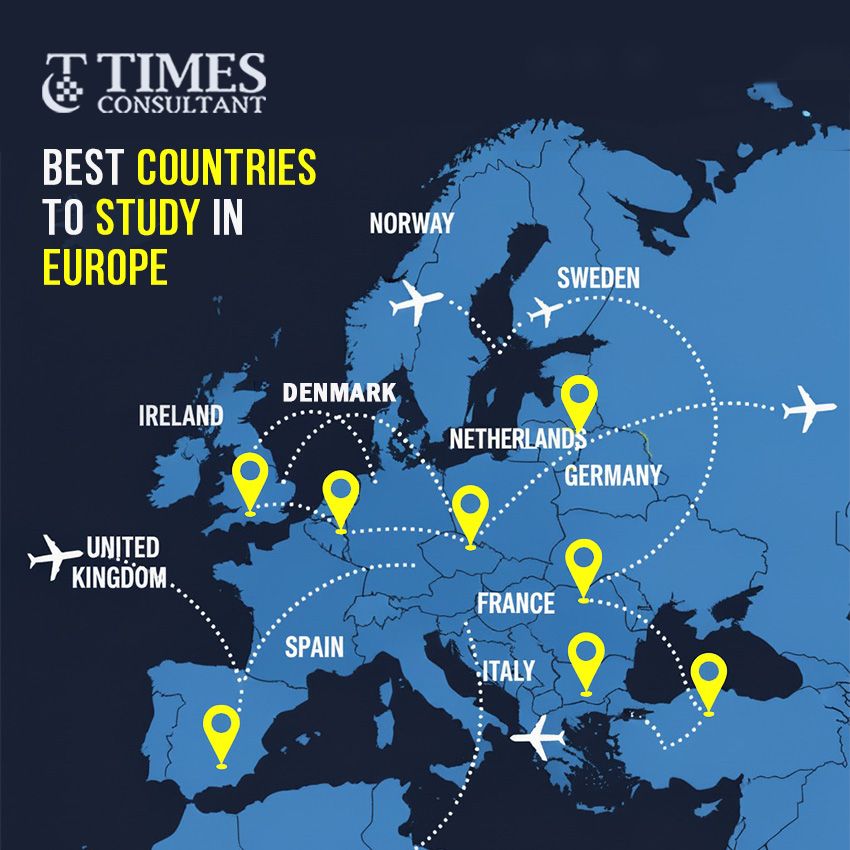
Best Countries to Study in Europe
Europe attracts the highest number of international students every year, but how do you decide if Europe is the right option for you? You're choosing a new home, a new culture, and potentially, a new life path. Which country in Europe offers the best value for your investment? Where will you find the most welcoming student community? How do you balance academic excellence with quality of life? If you're feeling overwhelmed by these choices, take a deep breath. We've researched, analyzed, and compiled everything you need to know about Europe's top study destinations. From scholarship opportunities to student life, we're about to make your decision-making process a whole lot easier.
This guide ranks countries based on their academic standing, top universities, employability rates, study costs, and postgraduate work routes for international students.
So, let's talk with consolidated facts and rankings about the best countries to study in Europe.
1. Germany
Germany ticks all the boxes needed to stand as the top study destination in Europe. Its academic standing, tuition-free education, top-ranked universities, quality of life, and employment opportunities brings it to the top. Germany has a culture that's both modern and steeped in history, so you get to experience the true essence of Europe here.
Employability Rate:
- Approximately 50% of international graduates stay in Germany, with high demand in tech and engineering sectors.
Educational System Ranking:
- Germany has 51 QS Top 1500 universities, with Ludwig Maximilian University and Heidelberg University ranking high for engineering, IT, and sustainability. The country’s education system emphasizes practical experience, integrating internships into degrees.
Cost Comparison:
- Tuition-free public universities charge only €100-€400 per semester in administrative fees, far lower than the UK (£10,000-£40,000/year) or the Netherlands (€8,000-€20,000/year). Living costs (€800-€1,200/month) are moderate compared to the UK (£2,571/month in London).
Ease of Graduate Routes/Post-Study Work Visas:
- Students can work up to 120 full days or 240 half days per year during their studies. An 18-month post-graduation residence permit facilitates job searches, offering streamlined paths to work visas in high-demand fields such as STEM. After 2-5 years, you become eligible for permanent residency, and after 8 years, you’ll obtain German citizenship.
Want zero-tuition options beyond Europe? See our Countries With No Tuition Fees guide.
2. United Kingdom
The UK is known for its academic excellence, hosting some of the world's best-known universities like Oxford, Cambridge, and Imperial College London. With a strong focus on innovation and research, UK universities provide courses across a range of fields, ensuring you get a top-tier education. Studying in the UK means earning globally respected degrees that can kickstart your career anywhere in the world.
Employability Rate:
- Approximately 94% of graduates secure employment within six months, with 13 universities featured in the THE Global University Employability Ranking 2025, including Cambridge, ranked at number 5, and Oxford, ranked at number 7.
Educational System Ranking:
- The UK has 35 QS Top 1500 universities, with Oxford, Cambridge, and Imperial College London excelling in business, medicine, and humanities.
Cost Comparison:
- Tuition ranges from £10,000-£40,000 per year, significantly higher than in Germany or Norway (free). Living costs in London (£2,571/month) exceed Spain (€700-€1,100/month) or Italy (€700-€1,200/month). Scholarships like Chevening help offset costs.
Ease of Graduate Routes:
- Students can work 20 hours per week during term time. The two-year Graduate Route visa (three for PhDs) offers robust job prospects in finance, healthcare, and tech. You can obtain permanent residence (ILR) in the UK after 5 years of work and citizenship after 1 year of ILR.
3. France
France lets you experience the centuries-old academic tradition combined with its modern approach to education and research. French institutions rank among the world's top universities, particularly in fields such as mathematics, physics, business, and the humanities, offering internationally recognized degrees that hold significant value in the global job market. Compared to other study destinations, the cost of education in France is low, especially at public universities.
Employability Rate:
- France has 12 universities in the 2025 Global University Employability Ranking, with École Polytechnique ranked at Number 10. High demand exists in business and the arts, with 85% of tertiary graduates employed within three years.
Educational System Ranking:
- Sorbonne University and HEC Paris rank high for humanities, business, and engineering. France’s 3,500 institutes emphasize research and practical training, especially in creative fields.
Cost Comparison:
- Public university tuition for non-EU students is €600-€3,000 per year, significantly lower than in the UK or Netherlands. Living costs (€900-€1,200/month) are comparable to those in Germany but lower than in Sweden (SEK 8,000-12,000/month). CAF housing aid reduces expenses.
Ease of Graduate Routes:
- Students can work 20 hours per week. A one-year APS visa supports post-graduation job searches, with opportunities in tourism and business. You get PR in France after 5 years.
4. Netherlands
Dutch universities are renowned for their innovative teaching methods, which are based on practical projects rather than just lectures. While tuition isn't the cheapest (around €8,000-15,000 per year), the quality of education and the country's central location in Europe make it a worthwhile consideration.
Employability Rate:
- Six universities are featured in the Global University Employability Ranking 2025, offering strong job prospects in tech and sustainability. Around 80% of graduates secure employment within a year, largely driven by industry connections.
Educational System Ranking:
- The University of Amsterdam and Utrecht University rank in QS Top 1500, excelling in environmental science and business. Over 2,100 English-taught programs emphasize innovation.
Cost Comparison:
- Tuition for non-EU students (€8,000-€20,000/year) is lower than in the UK but higher than in Germany or Norway. Living costs (€800-€1,200/month) match those in Germany but are lower than in the UK.
Ease of Graduate Routes:
- Students can work 16 hours per week during term time and full-time in summer. A one-year Orientation Year visa supports job searches in the tech and logistics sectors. To get PR in the Netherlands, you’ll have to work there for 5 years.
5. Sweden
Sweden's education system stands out for its unique "Freedom of Responsibility" approach, where students are encouraged to develop their own perspectives and question established norms. This distinctive educational philosophy cultivates independent thinking and innovation, skills highly valued in today's global workplace.
Employability Rate:
- High employability in tech and healthcare, with Karolinska Institutet and Lund University in the Global University Employability Ranking 2025. Over 80% of graduates secure jobs within a year.
Educational System Ranking:
- Sweden’s collaborative education system ranks high for medicine and sustainability. Karolinska Institutet and Uppsala University are QS Top 1500 leaders.
Cost Comparison:
- Non-EU tuition is SEK 80,000-120,000/year, higher than France but lower than the UK. Living costs (SEK 8,000-12,000/month) are comparable to those in Norway but pricier than in Spain. EU/EEA students study for free.
Ease of Graduate Routes:
- Unlimited work hours during studies are a unique perk. A one-year residence permit post-graduation supports job searches in high-demand fields. You get permanent residence in Sweden after 4 years and citizenship in 5 years.
6. Norway
Norway stands among the top nations globally based on its wealth, educational quality, health system performance, and strong safety measures. Norwegian educational institutions place a strong emphasis on supporting students who come from abroad during their transition into a new cultural and environmental setting. The majority of Norway's higher education institutions offer their programs at no charge to students.
Employability Rate:
- Over 80% of graduates secure employment, particularly in the marine and energy sectors, as ranked by the University of Oslo in the Global University Employability Ranking 2025. Norway’s low unemployment rate (3.2%) boosts prospects.
Educational System Rankings:
- The University of Oslo and Norwegian University of Science and Technology rank in QS Top 1500 for marine biology and engineering. Practical, research-focused education is a hallmark of their educational approach.
Cost Comparison:
- Tuition-free public universities (with fees of only NOK 1,000-2,000/semester) are cheaper than those in all listed countries except Germany. High living costs (NOK 10,000-15,000/month) exceed Spain and Italy.
Ease of Graduate Routes:
- Students are permitted to work 20 hours per week. A one-year job-seeker permit aids transitions to work visas in high-demand sectors.
7. Italy
The Italian education system stands out for its deep connection between theory and practice. Here, learning extends beyond classrooms; culinary students work with local food artisans, fashion design programs collaborate with world-renowned Italian fashion houses, and engineering students engage with Italy's innovative manufacturing sector. With various fields to study in Italy, you’ll get unique opportunities to explore the blend of tradition and modernity.
Employability Rate:
- Approximately 70% of graduates secure employment within three years, according to the University of Bologna's ranking in the Global University Employability Ranking 2025. Demand is high in fashion and archaeology.
Educational System Ranking:
- The University of Bologna and Sapienza University of Rome rank in QS Top 1500 for arts and medicine. Italy’s education system blends theory with practical training.
Cost Comparison:
- Tuition (€900-€4,000/year) is lower than in the Netherlands and UK, similar to France. Living costs (€700-€1,200/month) are among the lowest, comparable to Spain.
Ease of Graduate Routes:
- Students are permitted to work 20 hours per week. A one-year post-study permit supports job searches in the tourism and design sectors. PR in Italy is granted after 5 years of residence and citizenship after 10 years.
8. Spain
With relatively low tuition fees, amazing food, and a laid-back lifestyle, Spain offers a perfect mix of quality education and cultural experiences. Students who study in Spain don't just learn from textbooks, they engage with industry leaders, work on real projects, and build professional networks before graduation.
Employability Rate:
- Approximately 75% of graduates secure jobs within three years, according to the University of Barcelona's ranking in the Global University Employability Ranking 2025. Tourism and business sectors are strong.
Educational System Ranking:
- The University of Barcelona and the Complutense University of Madrid rank in QS Top 1500 for business and humanities. Spain’s system emphasizes practical skills.
Cost Comparison:
- Tuition (€1,000-€3,500/year) is relatively low, comparable to that in France and Italy. Living costs (€700-€1,100/month) are among the lowest, undercutting those in Germany and Sweden.
Ease of Graduate Routes:
- Students are permitted to work 20 hours per week. A one-year work visa supports job searches, with paths to residency after five years. PR in Spain is granted after 5 years of residence and citizenship after 10 years.
9. Ireland
Ireland’s education system is globally recognized for its high standards, with universities consistently ranking among the world's best. Students who choose to study in Ireland benefit from the country's significant investment in research and development, particularly in technology, science, and innovation. Its strategic location within the EU offers students exposure to European culture and business networks, as well as international career prospects.
Employability Rate:
- Approximately 80% of graduates secure employment within six months, with Trinity College Dublin ranked in the Global University Employability Ranking 2025. Tech and pharma sectors drive demand.
Educational System Ranking:
- Trinity College Dublin and University College Dublin rank in QS Top 1500 for medicine and computer science. Ireland’s tech-focused system is globally respected.
Cost Comparison:
- Tuition (€12,000-€25,000/year) is lower than in the UK but higher than in Germany or Spain. Living costs (€800-€1,500/month) are comparable to those in the Netherlands.
Ease of Graduate Routes:
- Students can work 20 hours per week (40 in holidays). A two-year post-study visa offers strong job prospects in the tech sector. Permanent residence is granted in Ireland after 5 years.
10. Denmark
As a student in Denmark, you’ll enjoy a safe, inclusive environment with access to affordable healthcare, efficient public transport, and a strong emphasis on work-life balance. The country’s academic excellence, creativity, and critical thinking offer a learning experience that prepares students for global careers.
Employability Rate:
- High employability in biotech and green tech, with the University of Copenhagen in the Global University Employability Ranking 2025. Over 80% of graduates secure jobs within a year.
Educational System Ranking:
- The University of Copenhagen and the Technical University of Denmark rank in QS Top 1500 for biotechnology and engineering. Denmark’s innovative teaching is top-tier.
Cost Comparison:
- Non-EU tuition (€6,000-€16,000/year) is lower than in the UK; EU/EEA students study for free. Living costs (DKK 6,000-10,000/month) are lower than in Norway but higher than in Spain.
Ease of Graduate Routes:
- Students can work 20 hours per week. A three-year post-study work permit, Europe’s longest, supports job searches. You get PR in Denmark after 5 years of continuous residence and citizenship after 9 years.
Comparing Europe with other regions too? Check our Best Countries to Study Abroad guide.
Final Thoughts
Setting foot in Europe as an international student opens doors to countless opportunities. You'll find yourself naturally adapting to new customs, picking up local languages, and developing a global perspective that will stay with you forever. This international experience significantly enhances your professional profile, as employers increasingly value candidates who demonstrate cultural adaptability, independence, and global awareness.
Before making this life-changing decision, carefully weigh all the factors we've discussed. And remember, you don't have to navigate this journey alone. Our experienced study abroad consultants are here to guide you through every step from selecting the perfect course and university to helping you settle into your chosen European destination.
Let’s get you there. Connect with us and start your application.