

Study Destinations
Need help? Contact our experts
+(92) 345 2066 100Seek knowledge even if you have to go as far as China, for seeking knowledge is a duty on every Muslim.
Belgium
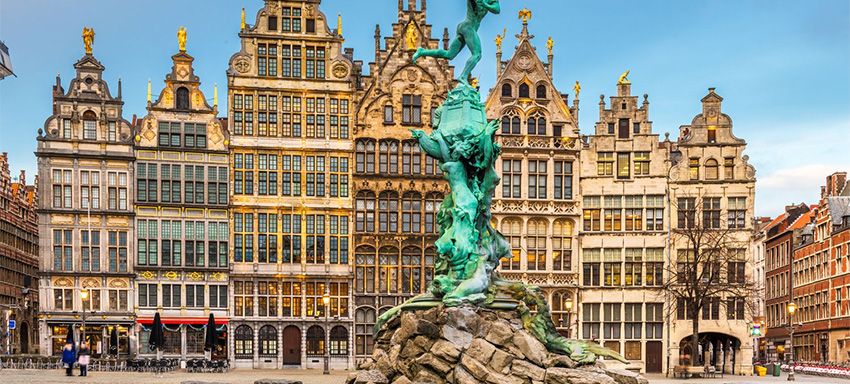
Most Pakistani families haven't considered Belgium when planning their child's education abroad. It's not the first country that comes to mind that's usually UK, Canada, or Australia. But over the past five years at Times Consultant, we've seen a quiet shift. More students are asking about this small European country wedged between France, Germany, and the Netherlands, and for good reason.
Belgium doesn't market itself aggressively like other study destinations. Yet it offers something increasingly rare: genuine European education at prices that won't drain your family's savings, in a country where three languages are official and the European Union makes its decisions.
The practical advantages are straightforward. Tuition at Belgian public universities runs €2,000 to €6,000 annually for bachelor's programs, a fraction of what you'd pay in UK or Netherlands. The country sits in the center of Europe, meaning weekend trips to Paris, Amsterdam, or London cost less than a domestic flight in Pakistan. And because Belgium hosts EU headquarters and NATO, internship opportunities in international organizations actually exist for students, not just on paper.
Table of Contents
- Why Study in Belgium?
- Cost of Studying in Belgium
- Intakes
- Scholarships for International Students in Belgium
- Student Visa Requirements for International Students
- Post-Study Work Opportunities
- Book a Meeting with an Expert
Why Study in Belgium?
Universities That Compete Globally Without the Global Price Tag
KU Leuven consistently ranks in the world's top 50 universities. Ghent University appears in the top 150. These aren't regional institutions trying to attract international fees, they're research-heavy universities where Nobel Prize winners have worked and pharmaceutical companies recruit directly from campus.
The difference from UK's top universities? KU Leuven charges around €4,500 annually for most bachelor's programs. Compare that to Imperial College London at £37,000 yearly, and you understand why Belgian universities are gaining attention from families who want education without the debt.
Belgian universities take research seriously. KU Leuven alone filed over 150 patents last year. Ghent University runs partnerships with pharmaceutical giants like Janssen and UCB. For students planning graduate research or PhD programs, Belgium offers lab access and funding opportunities that smaller countries simply can't match.
Three Languages, Three Education Systems, One Country
Belgium's split into Dutch-speaking Flanders, French-speaking Wallonia, and a small German-speaking community means you're essentially choosing between three different education styles within one country.
- Flemish universities (KU Leuven, Ghent University, University of Antwerp) operate in Dutch but offer extensive English-taught programs, particularly at master's level. The teaching style leans practical and research-focused. Class sizes are larger, and independent study is expected.
- French-speaking universities (Université catholique de Louvain, Université libre de Bruxelles) maintain a more traditional European academic approach. Lectures are formal, theoretical frameworks matter, and professors expect you to develop arguments through reading and discussion. More programs require French proficiency, though English options are expanding.
For Pakistani students, this matters because your language background affects your experience. If you studied British O/A-levels, English-taught programs in Flemish universities transition smoothly. If you have French language skills from school, Walloon universities offer programs where fewer international students compete for spots.
Brussels: The Boring Capital That's Actually Useful
Brussels won't win awards for excitement. It's not Paris or London - it's gray, rainy, and administrative. But it's also where the European Commission, European Parliament, and NATO headquarters operate. Hundreds of international organizations, lobbying firms, consulting companies, and NGOs cluster around these institutions. What this means practically: internship opportunities that would be competitive anywhere else become accessible to Belgian university students. We've had students intern at EU parliamentary offices, work with international trade associations, and assist at development agencies all while completing their degrees. The professional networks you build in Brussels carry weight across Europe. The person you meet during a university project might be working for a Brussels-based consultancy today and moving to a senior position in Amsterdam or Frankfurt in three years. These connections compound over time in ways that are harder to achieve studying in a university town without international institutional presence.
Quality of Life That International Students Actually Experience
Belgium ranks consistently in the top 20 countries for quality of life, but what does that mean when you're a 22-year-old from Lahore living on a student budget? It means your student transit pass (€40-€60 monthly) gets you unlimited access to trains, trams, and buses that actually run on schedule. You can reach Paris in 90 minutes by train, Amsterdam in two hours, London in two and a half hours. Weekend trips to other European cities cost €30-€60 return if you book ahead. Most of our students say they'd take Belgium's gloom over UK's expense or southern Europe's administrative chaos.
Get Free Consultation
Get a call-back within 24 hours
Cost of Studying in Belgium
Let's talk about the actual money you'll need, not theoretical minimums that assume you'll live on pasta and never leave your apartment.
Tuition Fees: What Public Universities Actually Charge
Belgium's public universities set tuition based on which linguistic community they belong to, but the ranges are fairly consistent:
Bachelor's Programs: €2,000-€6,000 per year
- Most Flemish universities: €2,500-€4,000 annually
- French-speaking universities: €3,000-€5,000 annually
- Engineering and specialized technical programs: Up to €6,000 annually
Master's Programs: €3,000-€8,000 per year
- Standard programs: €3,500-€5,500 annually
- MBA and specialized business programs: €6,000-€8,000 annually
- Research-focused master's: €4,000-€6,000 annually
PhD and Research Programs: €6,000-€12,000 per year (though many PhD students receive funding that covers this)
Private institutions exist in Belgium but they're rare in the university sector. Most are specialized business schools like Vlerick Business School or Solvay Brussels School, where tuition climbs to €15,000-€25,000 annually. For standard academic programs, public universities are the default choice, not a budget alternative.
Living Costs
Living expenses vary by city, with Brussels and Antwerp slightly more expensive.
-
Accommodation: €350 - €600 per month
-
Food & Groceries: €150 - €250 per month
-
Transportation: €40 - €60 per month (student passes available)
-
Utilities & Internet: €100 - €150 per month
On average, a student may need approximately €800 - €1,100 per month to live comfortably in Belgium. The accommodation market in Belgium requires understanding local norms. Most students rent rooms in shared houses or apartments (called "kot" in Flemish areas).
Intakes
Belgian universities generally offer two main intakes for international students:
-
Fall Intake: September (major intake)
-
Spring Intake: February (limited programs)
Applications for competitive universities often open months earlier, so students are advised to apply well in advance. For Pakistani students planning a bachelor's or standard master's degree, ignore the spring intake, it essentially doesn't exist for your purposes.
Scholarships for International Students in Belgium
Belgian scholarship opportunities exist, but they're targeted and competitive. Understanding which ones Pakistani students actually have realistic chances of winning matters more than applying to everything.
VLIR-UOS Scholarships (Flemish Government)
- These scholarships fund students from developing countries, including Pakistan, for master's programs and PhD research in Flanders (the Dutch-speaking region).
ARES Scholarships (Wallonia-Brussels Federation)
- Similar concept to VLIR-UOS but for French-speaking universities. ARES offers scholarships for master's degrees and training programs to students from developing countries.
Erasmus Mundus Joint Master's Degrees
- These EU-funded programs involve studying at multiple universities across Europe, with Belgium frequently participating. Erasmus Mundus scholarships are generous, full tuition plus €1,000-€1,400 monthly stipend for the two-year master's duration.
University-Specific Merit Scholarships
Individual Belgian universities offer limited scholarships, and most are partial tuition waivers rather than full funding. Examples:
- KU Leuven offers some merit-based funding for international master's students, typically covering 25%-50% of tuition.
- Ghent University has limited scholarships for exceptional students, often program-specific.
- Vrije Universiteit Brussel offers occasional grants for master's thesis research.
Apply for every scholarship you're eligible for. But simultaneously, ensure your family can support your studies without scholarship funding. That's the practical approach we recommend.
Belgium Student Visa Requirements for International Students
Belgian student visa requirements are detailed and strictly enforced. The process takes 8-12 weeks minimum, sometimes longer during peak application season (May-August). Start early.
Type D Long-Stay Student Visa
Pakistani students need a long-stay visa (Type D) to study in Belgium for programs exceeding 90 days. This isn't a tourist visa, it's specifically for educational purposes and leads to a residence permit after arrival.
Required Documents:
-
Valid passport
-
Completed visa application form
-
Acceptance letter from a recognized Belgian university
-
Proof of financial means (bank statements or sponsorship)
-
Health insurance coverage
-
Police clearance certificate
-
Medical certificate
-
Academic transcripts and certificates
-
Proof of accommodation
-
Visa application fee
-
Passport-size photographs
Post-Study Work Opportunities
Belgium's post-study work situation improved significantly with 2018 immigration reforms, but it's still not as straightforward as Canada or Australia's graduate visa programs.
- Students can work 20 hours/week during their studies (outside class hours).
After graduation, international students may apply for a 12-month job-search permit to find employment.
-
Once employed, students can transition to a work permit or EU Blue Card.
-
Belgium’s central location and connection to European institutions make it ideal for careers in international organizations, consulting, research, and multinational companies.
Belgium’s job market strongly values multilingual skills, giving students an advantage in the European workforce.
Top Universities in Belgium
When Pakistani students ask about "good" Belgian universities, they're usually checking whether their degree will be respected by employers back home or when applying for jobs elsewhere in Europe. These Belgian institutions consistently rank in global university lists and carry recognition:
- KU Leuven (Catholic University of Leuven)
- Ghent University
- Université catholique de Louvain (UCLouvain)
- Vrije Universiteit Brussel (VUB)
- Université libre de Bruxelles (ULB)
- University of Antwerp
- University of Liège
- Hasselt University
- University of Mons
- University of Namur
These universities consistently rank highly on global lists and attract a large number of international students for their research opportunities, high-quality education, and multicultural environments.
Book a Meeting with an Expert
Belgium doesn't attract attention the way UK or Canada does. No one grows up dreaming of studying in Brussels. But over 20 years at Times Consultant, we've learned that the best educational decisions aren't always the obvious ones. We start with an honest assessment of whether Belgium makes sense for your situation. There's no pressure, no obligation to proceed with our services after this initial meeting.
Let's discuss whether Belgium's combination of affordability, quality, and European access aligns with your educational goals and family budget. If it does, we'll map out the entire process from application to arrival. If it doesn't, we'll explain why and suggest alternatives that might work better. Twenty years in this business has taught us one thing: the right education decision isn't always the popular one. Sometimes it's the one that makes sense on paper, delivers quality, and doesn't leave your family financially strained.